DCChargingStation
Symbol | 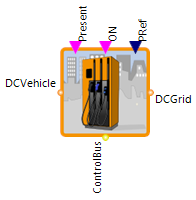 |
|---|
Use
You want to simulate a charging station that can be connected directly to a future DC grid?
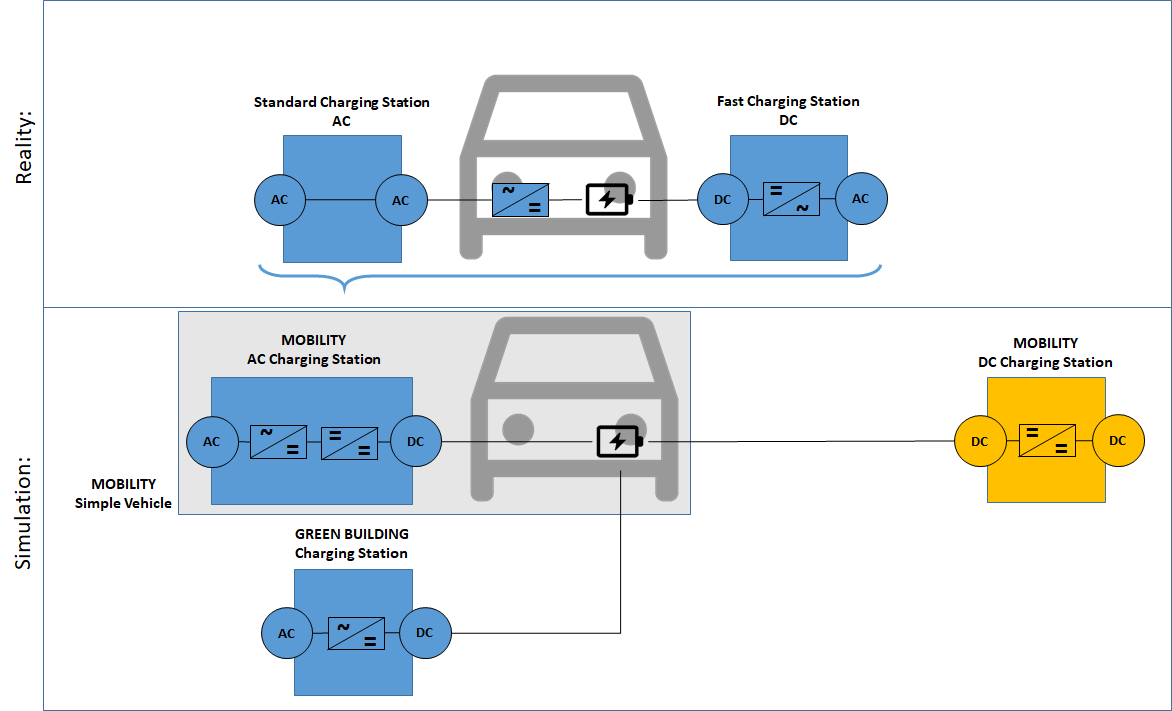
Use the DC charging station model and connect a vehicle to the charging station (BEV or PHEV). The DC charging station model simulates a single charging point where only one vehicle can be charged (or discharged) at a same time. The model is made for future DC-grids in buildings.
Important: The DC charging station model is necessary to couple an electric vehicle (BEV or PHEV) with the DC-grid of a building or an external battery. The DC in the model name defines the grid side of the charging station!
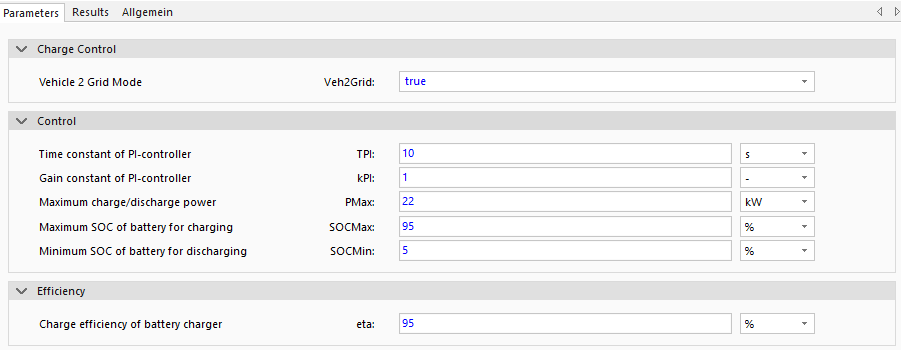
Parameters and Connectors
▶DCVehicle is the direct current connection between the vehicle and the charging station. The charging station controls the charging process of the vehicle via ▶ControlBus.
A charging (or discharging Veh2Grid=true) process can only be simulated if a vehicle is ▶Present at the charging station and the charging station is switched-on ▶ON. The reference charge (and discharge) power ▶PRef must be controlled by external controllers dependent on inner building energy system states (e.g. renewable energy availability or simulated electricity prices). If ▶PRef>0, the vehicle is charged and if ▶PRef<0, the vehicle is discharged.
Model Background
Internally, the model uses a DC/DC-converter model to transfer electrical power between to different DC-voltage levels.
The battery converter itself acts as a PI-controller which controls charge and discharge power via intermediate-circuit voltage on the vehicle-side, dependent on reference power. Ensure that all connectors are defined with correspondent battery characteristics, to avoid numerical problems.